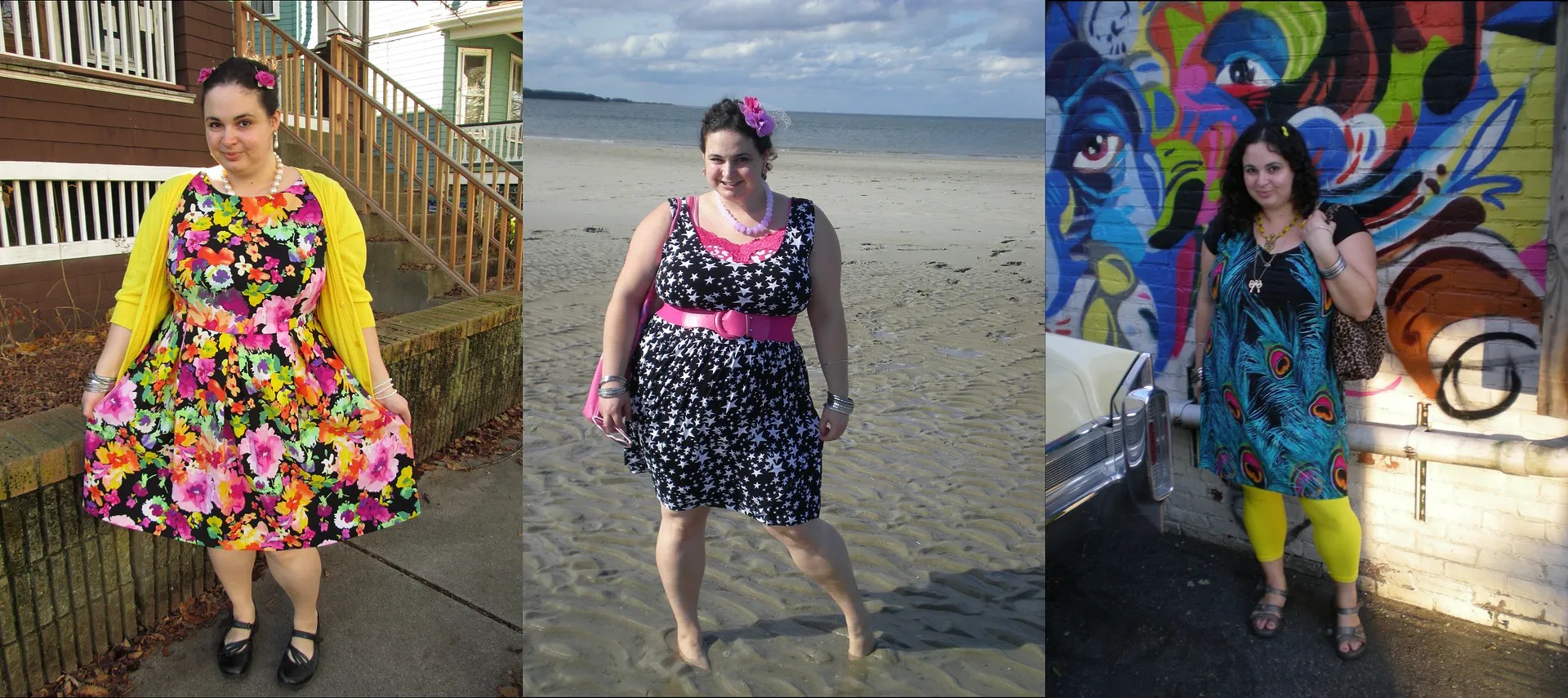
On fa(t)shion blogging, dead conversations, and the potential for transformation

Window display at my favorite jewelry store in Boston, So Good.

I recently came across a great piece by Arij Riahi at The Closet Feminist, Fashion blogging is not dead: our conversations are.

Arij analyzes the critiques of fa(t)shion blogging, which fall into two camps: elitists who look back fondly on the days when fashion was less accessible, and those who are dismayed by the increasing commercialization and depoliticization of the fashion blogging world. (See Natalie Perkins’ critique of fatshion blogging and the conversations it started.)

They note a similar evolution in the world of DIY blogs, including bloggers who sell DIY kits that cost as much as the item itself, and make an important point:

I question…how an idea that grew out of a rejection of mainstream capitalist consumerism could turn so easily into mainstream capitalist consumerism.

Capitalism co-opts everything it touches.

Including resistance to itself.

It’s pervasive and insidious, and incredibly hard to fight.

Arij continues:

I do find that there are a lot of larger, political issues in fashion– I like your camouflage coat, but I’d also like a conversation about the ethics of wearing military apparel. I don’t mind your luxury items, but I want to find out if it is craft(hu)manship or branding. I prefer a full tutorial, because I enjoy the agency that comes with wearing my own skirt. I have questions about second-hand clothing and the effect it has on African textile markets. I want to have these conversations, but I can’t find many spaces for them online.

I think that by narrowing down our fashion conversations, we miss the opportunity of reclaiming the body -the individual and the collective one- and highlighting how its presence, movement, and adornment is as an act of political resistance– not a commodity.

I agree 200%. I’ve found a few blogs that take on the ethics and politics of fashion, but not enough. I want more of these conversations. I’m thankful Arij is starting one.

I also I wonder if the commercialization of blogging is partly a symptom of our post-employment economy: people are trying to make ends meet however they can, including monetizing things like blogs that used to be non-commercial. And professional blogging can seem like a glamorous alternative to dead-end jobs, although it’s ultimately unsustainable for all but a small minority.

Of course, this commercialization is driven by corporations–but maybe they’d be less successful at co-opting everything if people had better job options. Maybe more people would be content to use their blogs for personal reflections if they could rely on well-paying, secure jobs to pay their rent.

And so the system replicates itself.

How do we break the cycle? How do we keep these important conversations going in a system that wants to co-opt and neutralize them? How can we, as fa(t)shion bloggers, get back to our radical roots?

I don’t know exactly how we can do it, but I hope we are on the brink of a transformation, a tiny part of the Great Turning that’s gathering steam throughout the world.

I’ll be right here, waving my sparkly pom-poms for the revolution.

Sunday links, 12/22/13

Merry almost-Christmas to those who celebrate it, and I hope you are all having a warm and festive season!

Fa(t)shion
-On fashion as armor.
-So apparently Torrid is rebranding itself to be less alternative and more trendy–didn’t that already happen like eight years ago? Torrid hasn’t been alternative in a long, long time.
Bangladesh factory fires: why brands are accountable and should compensate victims now.
-The Closet Feminist questions the meaning of quirky style in a three-part series here, here, and here.
Why “12 Years a Slave” star Lupita Nyong’o should be your new fashion idol.

Fat Acceptance
Memo to Michelle Obama: fat shaming is not ok.
-Sadly, there will not be a NOLOSE conference in 2014, but people are planning local fat events all over the country. If you’re in Boston, check out the Boston area fatties meetup group for updates!
-If you’re looking to make a holiday donation that promotes body positivity, check out the Girls Rak bellydance and body image program.
Just no, Jennifer Lawrence.
Tyra Banks, please say no to Special K.
The HAES files: examining the so-called “evidence.”
-If you’re in San Francisco, check out Marilyn Wann’s Movement of the Month Club.
-Yet another way that diet culture is harmful to people’s health: spike in harm to liver is tied to dietary aids.

Climate and Sustainability
-Bill McKibben’s latest: Obama and climate change: the real story.
Renewable energy, education, and economic development combine at Philadelphia Solar Schools Initiative.
Sink tank: in Miami, climate scientists ask, “how soon, how deep?”
The entire IPCC report in 19 illustrated haiku.

Jobs and the Economy
This new conference on transition economics looks potentially awesome.
-I love the idea of Write A House, a new organization that gives houses to writers in Detroit. They’re raising money by IndieGoGo for their first home renovation.
An open letter to Sheryl Sandberg from a 20-something woman in tech.
“We don’t have a marketing budget”: the dirty side of blogging.
Surviving rent: why artists can’t afford critical neutrality.

Everything Else
I don’t want Tim Wise as an ally. No thanks.
-Melissa writes about how the way Beyonce is sexy with her partner feels safe to her.
On defending Beyonce: black feminists, white feminists, and the line in the sand.
Hot sauce over humanity: on Sriracha.
Notes from the urban/rural divide: romance vs. reality.
-I really like this piece, which ties in with my recent post on the complexity of hope: Hope, power, and how Occupy invigorated our generation’s fight for survival.
On gender diverse parenting vs. raising a gender creative kid.
On depression, and the toll academia extracts.
A female author talks about sexism and self-promotion.
-Lindy West’s takedown of Love, Actually is perfect and hilarious. “Cock-blocktopus” = my new favorite word ever.
How to be less of a jerk to students with anxiety disorders.
Sensitive Santas, who are specially-trained to work with autistic children, are a huge win for families.
20 last-minute black feminist gift ideas for girls.
Calling IN: a less disposable way of holding each other accountable.
-Tori writes about many of her students losing their food stamp benefits.
-Angi writes about her big polyamorous wedding.
A personal look at #NotYourAsianSidekick, and an interview with Suey Park, who started the hashtag.
On long-term travel as running toward, not running away.
Darcy the hedgehog’s Instagram pictures are adorable!

OOTD: Pikachuuuuu!

This shirt is so much fun.

I wonder if having an electric Pokemon so close to my heart is dangerous, though? 😉

shirt: TeeTurtle, skirt: Torrid, shoes: Naot, socks: Domino Dollhouse, bow: Crown & Glory, rhinestone necklace: Target, peacock necklace: eBay, bangles: Deb, stretchy bracelet: homemade (I’ll post some close-ups of it, and a few other bracelets I made recently, soon!), earrings: So Good

I believe in fashion.

When I first started reading Web Smith’s piece “The Lost Art of Buying Clothing,” I thought I’d agree with most of it. I’m all for making more durable clothing (especially leggings/pants/shorts that don’t wear out in the thighs–are you listening, plus size clothing manufacturers?). I’m all for moving from the unsustainable fast fashion model to a slower one, one that pays its workers a living wage and doesn’t wreck the planet.

But then I got to this part:

But what about the changing of styles? Rules of thumb: (1) if you don’t think you’d wear it in seven years, you may want to put it back (2) if the tailoring that you desire is too “in”, it may be out in a few years (3) and some patterns and colors will remain near the top for a lifetime. See, I do not believe in fashion. I do believe in amazing pieces that remain timeless through the ages.

This is where I disagree.

I believe in fashion.

I believe in playing dress-up, playing with color, texture, pattern, proportion.

I believe in fashion as an accessible art form.

I believe in fashion as a form of self-expression that changes with me. I’m not the same person I was seven years ago–why would I want to dress like her? And who knows what my style will be like in seven years?

There are some trends from my teenage years that I still love–hell, I’d dress like a Delia*s  catalog half the time if I could find that stuff in my size.  And I’m all for having a few timeless pieces, like my favorite little black dress (which, for what it’s worth, was a cheap Target buy at least six or seven years ago and is still in great condition). But the thought of buying clothing for the next seven years sounds stifling.

Smith goes on to list five things to consider when buying, which starts with this:

High fashion has its place, 95% of us do not live in that place. Set aside Hypebeast trends for classic colors, fits, patterns, and heritage pieces: the blue blazer, the tweed sport coat, the brown slim fit dress pant, the selvedge denim, the oxford, durable point collars, the spread collar for when you need it. You may never be the most “fashionable” on the block but you will applaud at your old photos, three years from now.

Continue reading

Sunday links, 12/15/13

me holding an icicle up to my head like a unicorn horn

I’m an ice unicorn!

The above picture is from a hiking trip I took with my family over Thanksgiving weekend, where we saw waterfalls and lots of cool ice formations.

Fa(t)shion
-Fellow Bostonians, check out the Sip & Swap: Curvy Edition happening next month!
-Ugh, H&M, always doing good and bad stuff at the same time. They’re planning to raise the pay of their textile workers, which is important, and will hopefully influence other brands to do the same. But they’re also taking down their plus size section to make more room for holiday sale items. I’m not sure whether this is a company-wide policy or just that particular store, but either way, it’s shitty.
-Sarah rounds up Australian-made flower crowns. I love them all!
-This roundup for gender-bending bridal wear has lots of inspiration for everyday style as well.
ReKixx aims to become a closed-loop shoemaker.
-This women’s holiday collection made from discarded fabric is gorgeous. But I’m so, so sick of sustainable fashion lines that only make straight sizes. Fat people want cute clothing that doesn’t destroy the environment too, dammit.

Climate and Sustainability
Pushing poor people to the suburbs is bad for the environment.
How parking is like a sandwich.
Harvesting waste plastic for 3D printers to reduce poverty.
“Every little bit helps” is a dangerous mantra for climate change.
-The links between climate change, disconnection from nature, and depression.
Where farmers markets and CSAs fall short: moving local food beyond a faddish economy.
-Check out the Kickstarter for this documentary on the resistance to the Keystone XL pipeline, which looks awesome.
-I love this short video about the fossil fuel divestment movement.

Jobs and the Economy
How (not) to avoid the academic job market: “Sometimes I feel like I am giving up an important part of myself. My anxiety about the job market was my anxiety about who I wanted to be slammed up against the realities of who I could be.”
This piece on San Francisco’s class and culture wars is the best, most nuanced analysis of gentrification I’ve ever read. The author cuts right to the heart of the issue with this question: “Is a city’s housing stock a public good that provides members of a community a place to live or is it a financial instrument used to store and expand wealth?”
Why are we so obsessed with “hard work?”
Linda Tirado, who wrote “Poverty Thoughts,” is not a hoax. It’s ridiculous that so many people are calling her one just because her experience doesn’t match their stereotypes about poverty.
The strange case of Professor Veldhuis, who lost his job mid-semester, and the lack of job protection for adjuncts.

Everything Else
That time Beyonce’s album invalidated every criticism of feminism EVER. (Btw, how awesome is it that one of her new songs features Chimamanda Ngozi Adichie?!)
Why don’t the bi people just come out already? An open letter to Dan Savage.
The 28 most iconic feminist moments of 2013.
As a black feminist, I see how the wider movement fails women like my mother.
On the criminalization of young black and brown boys.
Ableism in social justice culture.
The discomfort zone: Minneapolis professor Shannon Gibney reprimanded for talking about racism.
What do we mean when we say colonized? I think this is an important distinction–I’ve seen a lot of people using “colonization” as a synonym for “racism,” but racism is so much more complex. There are plenty of ways to structurally disempower people without colonizing them, and it’s important to talk about them as well.
-These close-up photos of snowflakes are amazing.

OOTD: Killer bunnies and cat ears

Last weekend, my friends had a benefit party to raise money to help cover the vet bills for their two cats, who had both been sick recently. (Luckily, the kitties are doing better now!)

They suggested that people wear cat ears, so I did…

shirt: TeeTurtle, cardigan: Torrid via eBay, tutu: Target (forever ago), leggings: Wet Seal, cat ears: probably CVS?, necklace: from a clothing swap, wristband: PacSun, bangles: Deb, earrings: gift from a relative, shoes: Naot

The shirt, of course, is a reference to the killer rabbit from Monty Python and the Holy Grail. It’s one of a few TeeTurtle shirts I have (you can see my hedgehog one here and here, and I’ll be posting an outfit with a Pikachu one soon), and I love them–they’re super-soft, and they fit me really well, unlike most men’s t-shirts.

If you’re at all into geeky or cute t-shirts, I highly recommend TeeTurtle. They have tons of adorable stuff, pop-culture and internet meme references, and awesome cross-fandom geekery (Harry Potter/Pokemon, Doctor Who/Zelda, and more).

Continue reading

The complexity of hope

Last night one of my favorite writers, Sarah Kendzior, posted a series of tweets that started with the statement, “I do not know what is more damaging to young people in this economy: fear, or hope.”  I Storified some of the conversation here; my feelings are complicated.

There are so many different kinds of hope.

There’s the kind that keeps people passive, the kind Kendzior is talking about: the kind that says “maybe someday I’ll get a good job, so I’ll keep my head down, accept my exploitation, not criticize the system.” (Which is in its own way a survival strategy, and there’s a fine line between analyzing it at the societal level and looking down on the people who use it.)

But there’s also the kind of hope that keeps people alive and engaged, the kind that wards off paralyzing despair: the kind that says, “I’m going to keep putting one foot in front of the other, because there’s a chance things will get better someday.” The kind that has seen the alternative, and isn’t willing to fall down that hole.

There’s the kind that goes hand-in-hand with compassion and resistance. The kind that says, “I believe the moral arc of the universe bends toward justice. I know in my bones that we can make a difference, even if the odds are against us. I believe in the power of love, of community, of connection. We will rise up.”

There’s nothing inherently naive or passive about hope.

Hope isn’t necessarily dependent on fantasies of an external savior. It isn’t mutually exclusive with thinking critically, facing fear, and acting for justice.

Hope is just one tool in the human emotional/philosophical toolbox.

For some people it’s useful, even necessary.

Other people find that it holds them back–that they can only act effectively when they feel, deep down, that there’s nothing left to lose. That they need something more concrete than hope, more grounded in the present.

Both–all–reactions are ok.

It’s ok to feel however you feel.

What matters is how you act.

Hold onto whatever you need to.

Let go of whatever you need to.

Just keep your fire burning–whether that means fighting, surviving, or something in between.